

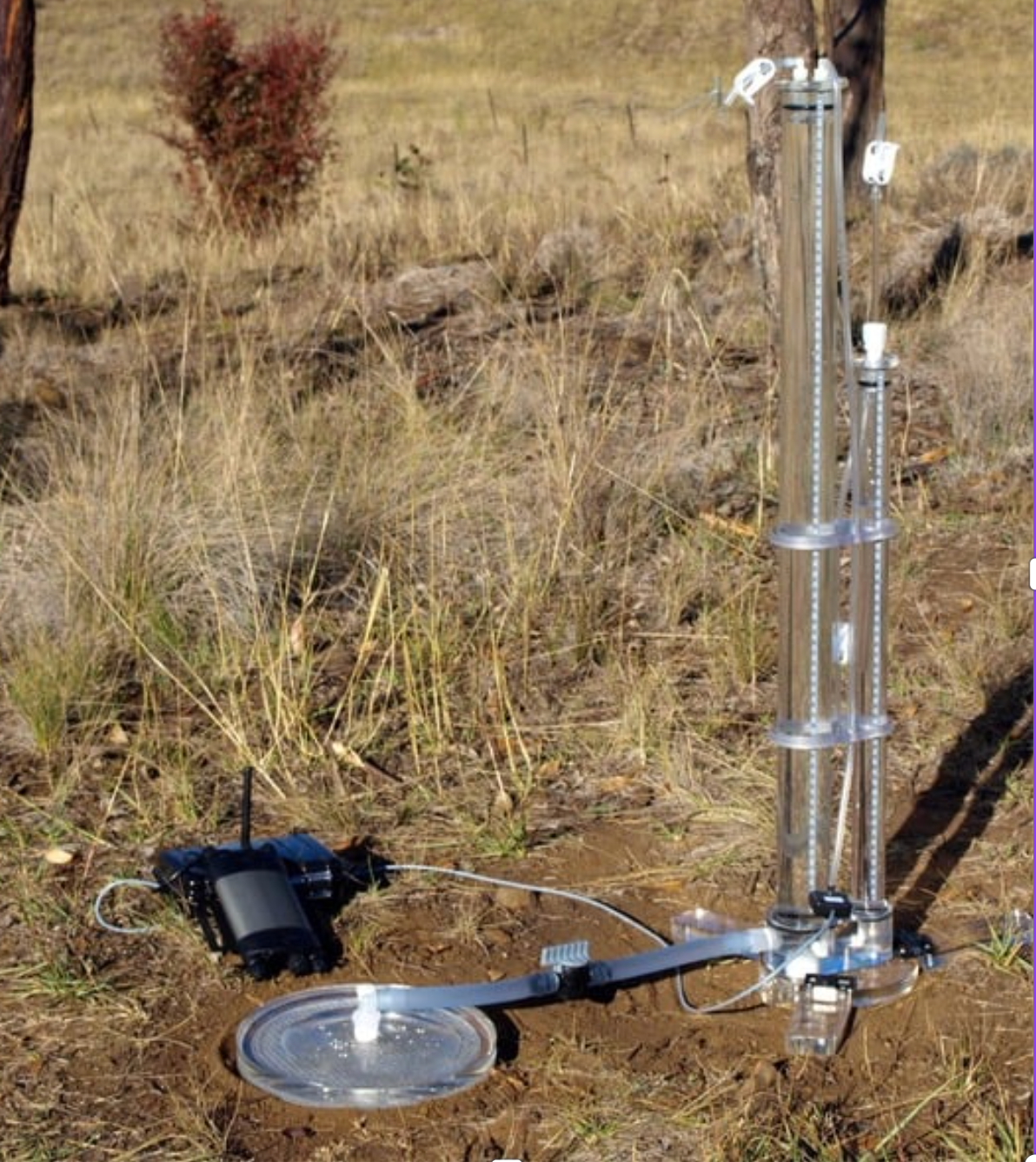
What Hydraulic Conductivity Measures
Hydraulic Conductivity describes how easily water moves through soil. This is an important property because it influences how quickly water can enter, move through, and drain from the soil profile. Understanding hydraulic conductivity helps users evaluate how soil behaves under wet conditions, how water becomes available to plants, and whether the soil is likely to retain excess water or allow effective drainage.
Because water movement is closely tied to plant performance and field management, hydraulic conductivity plays a key role in predicting plant water uptake, understanding the risk of water logging, and evaluating the potential for surface runoff. It is also valuable in more technical applications such as subsurface drainage design and soil contamination assessment, where understanding how water moves through soil helps users make better engineering, environmental, and land management decisions.
Soil Water Movement Prediction
Helps users assess how easily water moves through soil and how that affects soil-water behavior under different conditions.
Plant Water Uptake Interpretation
Supports better understanding of how soil water flow influences plant access to water in the root zone.
Water Logging and Runoff Assessment
Provides valuable insight for drainage planning and for technical applications involving soil contamination and water movement.
Drainage and Environmental Evaluation
Can be configured with thermistor or thermocouple options depending on the application and monitoring requirement.
Predicting Soil Water Movement
Hydraulic Conductivity is used to understand how water travels through the soil profile, helping users interpret drainage behavior and soil-water flow.
Plant Water Uptake Analysis
Because water movement affects root access to moisture, it helps users better understand how soil conditions may support or limit plant water uptake.
Water Logging and Runoff Risk
It is useful in evaluating whether a soil may retain excess water, drain too slowly, or contribute to runoff under certain conditions.
Subsurface Drainage Design
Hydraulic Conductivity information is important in the design of subsurface drainage systems where understanding soil water flow is essential.
Soil Contamination Assessment
It can also support environmental and technical studies where water movement through soil affects the spread or behavior of contaminants.
HYDRAULIC CONDUCTIVITY
is used to predict soil water movement, plant water uptake, and the potential for water logging and runoff, while also supporting drainage design and soil contamination assessment.