

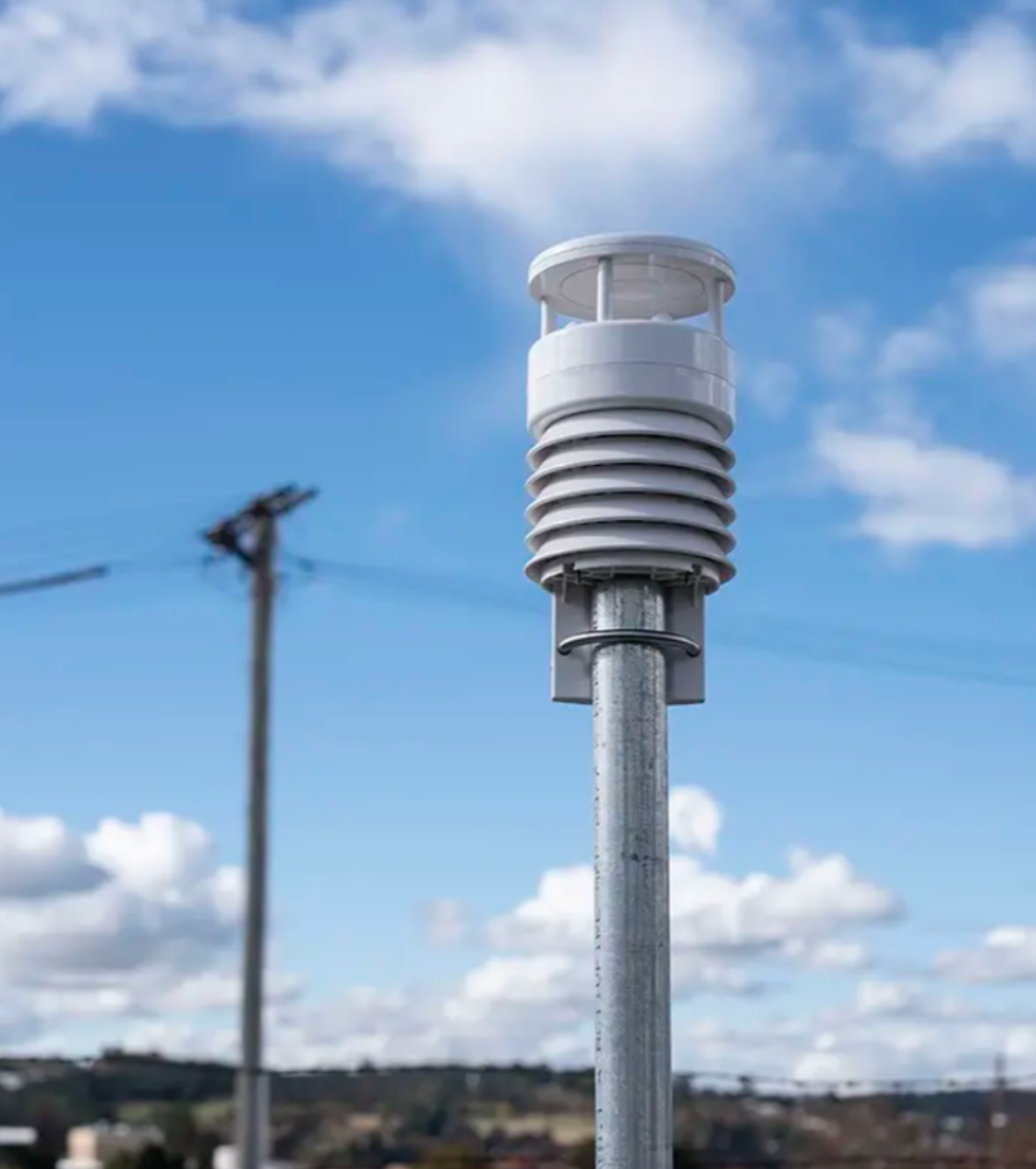
What Evapotranspiration (ET) Monitoring Measures
Evapotranspiration (ET) monitoring systems are used to assess the environmental conditions that drive water loss from the soil and plant system. By measuring solar radiation, air temperature, relative humidity, and wind speed, these integrated weather stations help users monitor the factors that influence evapotranspiration and crop water demand under real field conditions.
Because evapotranspiration is closely linked to plant water use, irrigation timing, and environmental evaporative demand, reliable ET-related measurement provides valuable support for both practical agriculture and research. These systems help users interpret how weather conditions affect water movement through the soil–plant–atmosphere continuum, making them useful for irrigation planning, environmental observation, and integrated monitoring programs where weather-based water use insight is important.
Solar Radiation Measurement
Measures solar radiation as a key environmental factor influencing evapotranspiration and plant water use.
Air Temperature and Relative Humidity
Monitors air temperature and relative humidity to help users understand atmospheric conditions affecting evaporative demand.
Wind Speed Measurement
Measures wind speed to support interpretation of how air movement influences evapotranspiration and field conditions.
Integrated ET Monitoring
Combines multiple weather variables into one monitoring system to support evapotranspiration-related analysis and decision-making.
Irrigation Planning Support
ET monitoring systems help users better understand crop water demand and support more informed irrigation timing.
Weather-Based Water Use Interpretation
By measuring the environmental drivers of evapotranspiration, these systems help users interpret field water-use conditions more effectively.
Agricultural Monitoring
They are useful in crop production and agricultural monitoring where weather conditions strongly affect plant performance and water demand.
Environmental and Research Applications
ET systems are valuable in research and environmental observation where users need structured weather-based data for water-use and climate-related analysis.
Integrated Monitoring Programs
When combined with soil moisture, plant water status, and broader weather monitoring, ET systems contribute to a more complete understanding of field performance.
Evapotranspiration (ET) monitoring systems
are designed to measure the key weather variables that drive water loss and plant water demand in the field.