

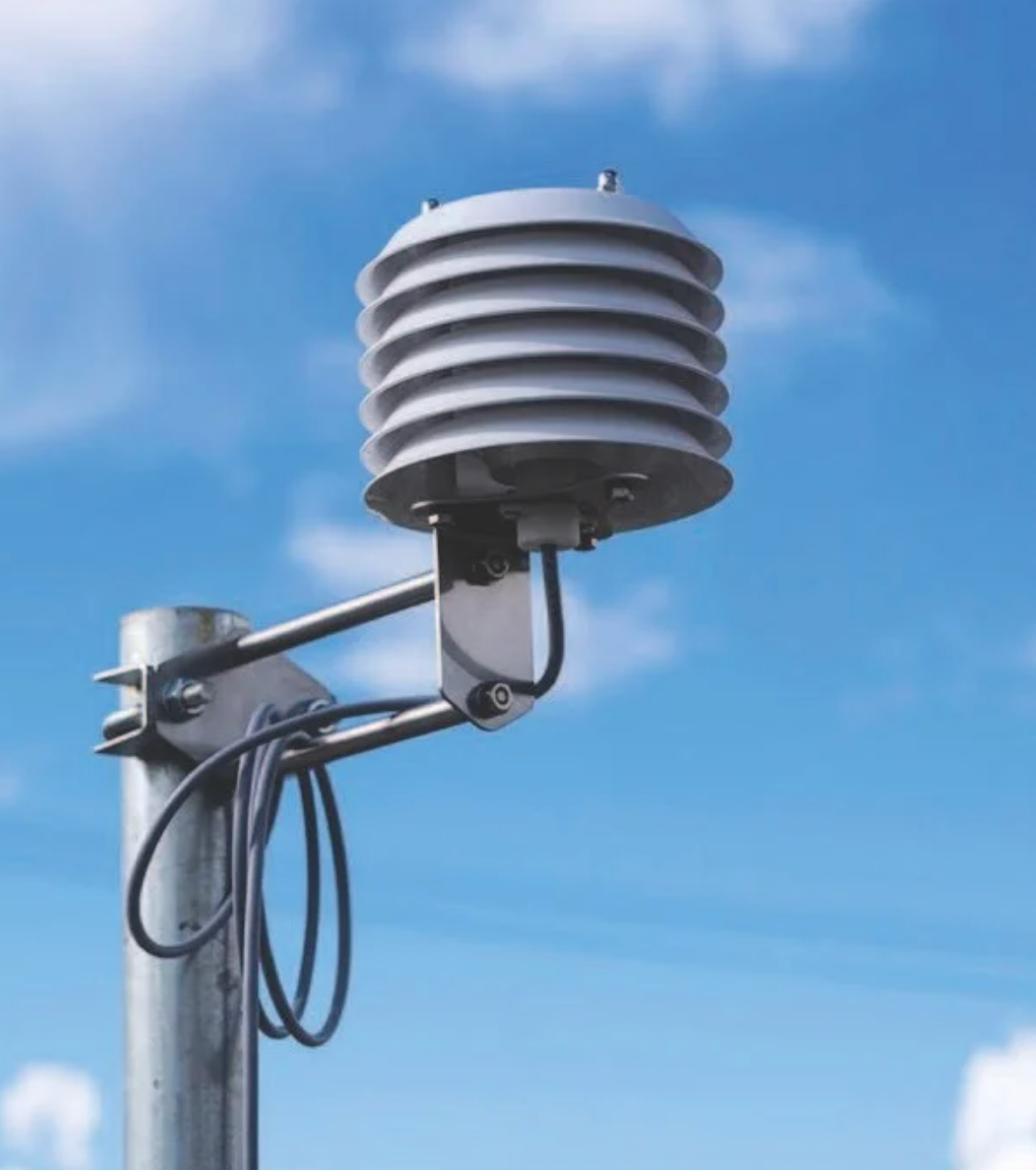
What ATH Temperature and Relative Humidity Sensors Measure
ATH Temperature and Relative Humidity Sensors measure the temperature and relative humidity of the air in and around the plant canopy, providing important insight into the actual environmental conditions experienced by the crop or monitored plant system. Because conditions within the canopy can differ from broader weather readings, in-canopy measurement is especially valuable when users need more precise understanding of the plant’s immediate environment.
These measurements are also important for calculating Vapour Pressure Deficit (VPD), which helps describe how strongly the atmosphere is drawing moisture from the plant. This makes ATH sensors particularly useful in applications where users want to predict or interpret plant response to environmental evaporative demand, plant stress, and water-use conditions. In research and practical field monitoring, they provide a strong environmental context for understanding plant behavior and water demand.
In-Canopy Temperature Measurement
Measures air temperature within the plant canopy to provide more relevant local environmental information.
In-Canopy Relative Humidity Measurement
Measures relative humidity where the plant is actually growing, helping users better interpret atmospheric conditions around the canopy.
Vapour Pressure Deficit Support
Provides the key measurements needed for VPD calculation, supporting analysis of plant evaporative demand and stress response.
Plant Environment Interpretation
Helps users understand how local temperature and humidity conditions influence plant response and water-use behavior.
In-Canopy Environmental Monitoring
ATH sensors are ideally suited for monitoring the actual temperature and humidity conditions surrounding the plant canopy.
Vapour Pressure Deficit Measurement
By measuring temperature and relative humidity, these sensors support VPD calculation for plant stress and evaporative demand interpretation.
Plant Response Prediction
They help users better understand how plants may respond to environmental demand under changing field or research conditions.
Irrigation and Water Use Context
Because evaporative demand affects plant water use, ATH sensors can support broader irrigation-related interpretation when combined with plant and soil monitoring.
Integrated Environmental and Plant Monitoring
When used with sap flow, psychrometers, soil moisture sensors, and weather systems, these sensors help build a more complete view of the soil–plant–atmosphere continuum.
ATH Temperature and Relative Humidity Sensors
are designed to measure the local atmospheric conditions experienced by the plant canopy, providing more relevant environmental information than broader weather data alone.