What NDVI Sensors Measure
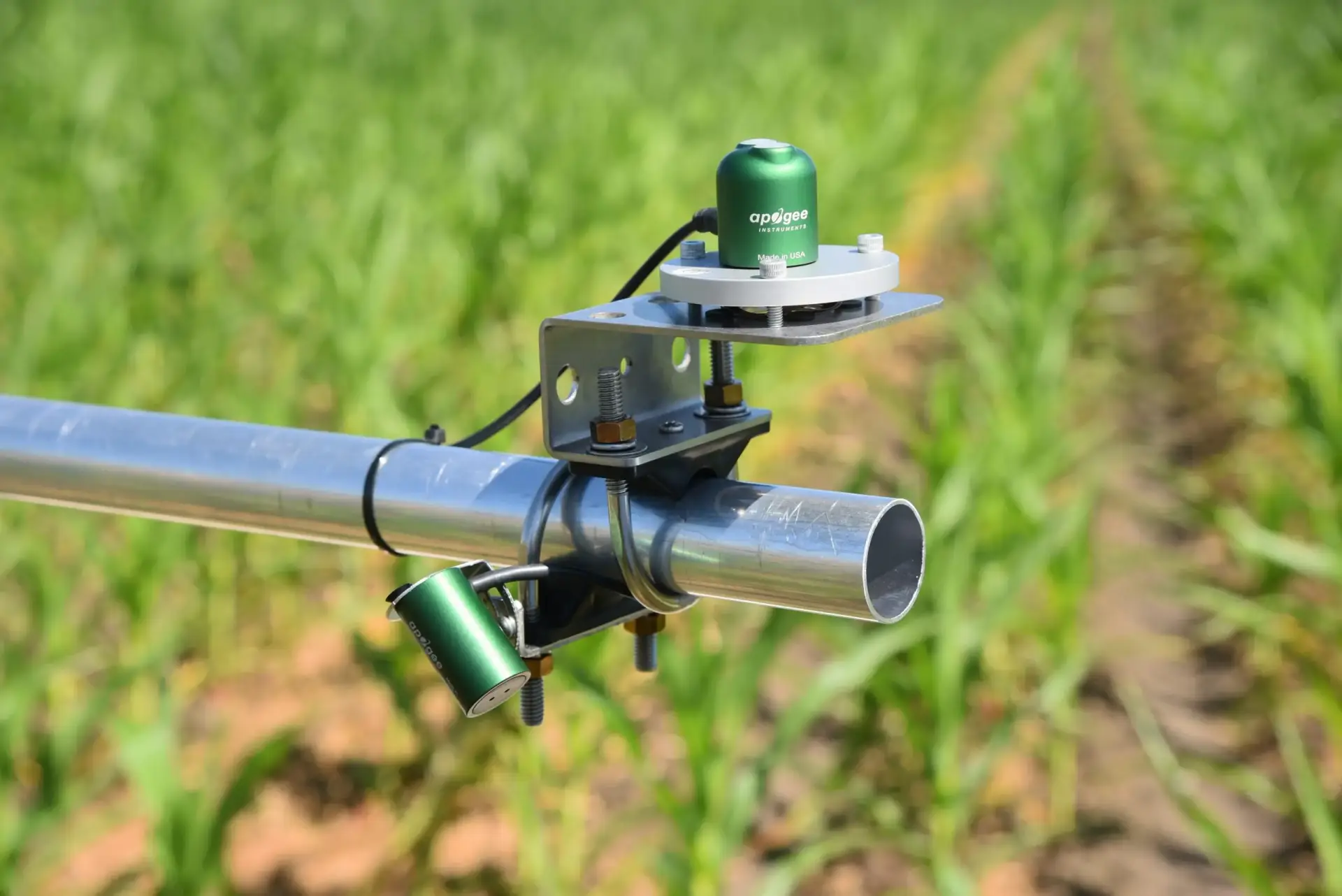
NDVI Sensors are used to measure vegetation response through the interaction of light in the red and near-infrared (NIR) spectral ranges. These measurements are used to generate vegetation-related insight that helps users understand canopy growth, plant condition, and overall crop performance. Because healthy vegetation reflects and absorbs light differently from stressed or less developed vegetation, NDVI monitoring provides a practical way to assess plant status across field and research applications.
The NDVI Sensors use spectral ranges of 650 nm ± 5 nm with 65 full-width half-maximum (Red) and 810 nm ± 5 nm with 65 full-width half-maximum (NIR). These spectral bands support vegetation monitoring by helping users evaluate how plants are responding over time and how canopy condition changes under different environmental or management conditions. This makes NDVI sensors useful for growth monitoring, crop assessment, comparative field studies, and integrated plant monitoring programs.
Leaf Area Measurement
These systems help users assess leaf area as an important indicator of plant growth, structure, and development.
Red and NIR Spectral Measurement
Measures vegetation response using 650 nm ± 5 nm (Red) and 810 nm ± 5 nm (NIR) spectral ranges to support NDVI-based monitoring.
Canopy and Vegetation Assessment
Helps users evaluate plant growth, canopy condition, and general vegetation performance under field or research conditions.
Growth Monitoring Support
Useful for observing how vegetation changes over time, especially where plant development or crop condition needs to be tracked.
Plant Growth Monitoring
NDVI Sensors help users observe canopy growth and vegetation development over time, making them useful in crop monitoring and plant performance assessment.
Canopy Condition Assessment
By using red and NIR response, these sensors support evaluation of canopy condition and vegetation status under changing field conditions.
Crop and Comparative Studies
NDVI data can be used to compare crop areas, treatment groups, varieties, or species where vegetation response and growth differences are important.
Field-Based Plant Monitoring
These sensors are useful in field applications where users need practical and repeatable spectral information to support monitoring decisions.
Integrated Monitoring Programs
When combined with canopy imagers, leaf area meters, chlorophyll sensors, gas exchange systems, soil moisture monitoring, and environmental sensors, NDVI data contributes to a more complete understanding of plant performance.
Red and NIR measurement bands
Uses 650 nm ± 5 nm and 810 nm ± 5 nm spectral ranges with 65 full-width half-maximum.